Atlas works alongside plant teams to restore performance and sustain it over time

Atlas works alongside plant teams to restore performance and sustain it over time

Engagements begin with a focused project and continue as ongoing engineering support as plant conditions change.

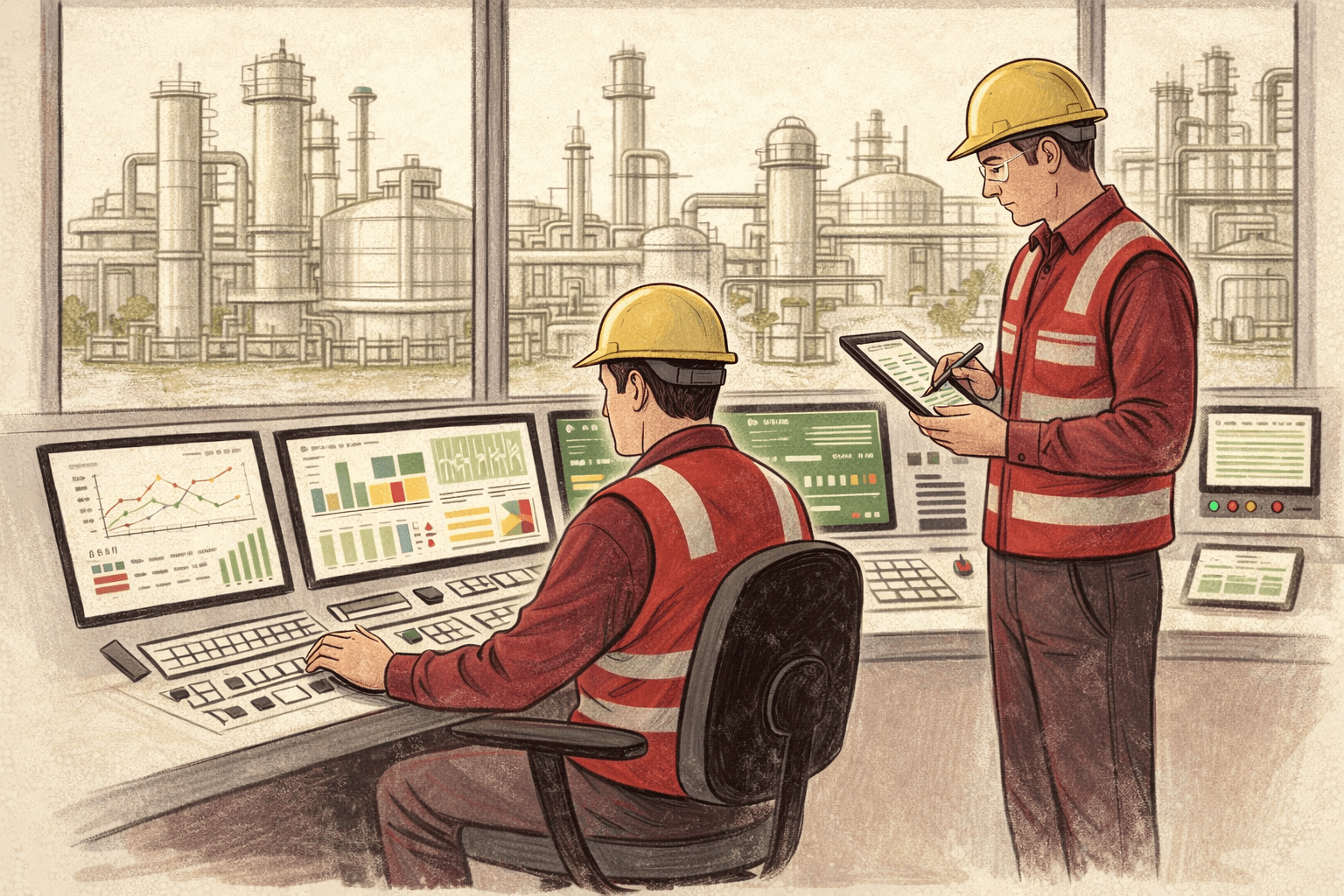
Improving plant performance requires more than resolving individual issues. While focused project work is used to diagnose and correct specific problems, maintaining performance depends on ongoing engineering support as conditions evolve. Sustained results come from combining targeted intervention with continuous alignment in operation.

Project Engagements

When performance has degraded, focused engineering work is used to diagnose and correct issues directly within the control environment.

Start with a specific operating issue

→ isolate where performance has drifted

We begin with a specific operating issue: instability, inefficient transitions, or underperforming control.

The focus is to isolate where performance has drifted and identify the underlying cause.

Start with a specific operating issue

→ isolate where performance has drifted

We begin with a specific operating issue: instability, inefficient transitions, or underperforming control.

The focus is to isolate where performance has drifted and identify the underlying cause.

Diagnose root cause and implement changes

→ execute diagnostics, tuning, and targeted changes

Diagnostics, model updates, and improvements are carried out directly within the plant’s control systems, working alongside plant engineers in live operation.

This may include APC improvement, loop tuning, CLPM implementation, or developing models and soft sensors where predictive control is not in place.

Diagnose root cause and implement changes

→ execute diagnostics, tuning, and targeted changes

Diagnostics, model updates, and improvements are carried out directly within the plant’s control systems, working alongside plant engineers in live operation.

This may include APC improvement, loop tuning, CLPM implementation, or developing models and soft sensors where predictive control is not in place.

Restore stable performance in operation

→ results show up in the plant

Changes are reflected directly in plant performance; more stable operation, improved control response, and reduced reliance on manual intervention.

Performance is measured in the unit, under real operating conditions, where the impact is clear and sustained.

Restore stable performance in operation

→ results show up in the plant

Changes are reflected directly in plant performance; more stable operation, improved control response, and reduced reliance on manual intervention.

Performance is measured in the unit, under real operating conditions, where the impact is clear and sustained.

Establish control capability where needed

→ build visibility and foundational models

In environments without advanced control systems, Atlas establishes baseline models, soft sensors, and control strategies to enable stable and measurable performance.

Establish control capability where needed

→ build visibility and foundational models

In environments without advanced control systems, Atlas establishes baseline models, soft sensors, and control strategies to enable stable and measurable performance.

When performance issues show up in your plant

These are the signals of performance drift that typically require focused intervention.
Reactor instability

Temperature, pressure, or reactor behavior begins to swing, leading to off-spec production, operating risk, or unstable upstream and downstream conditions.

Inefficient grade transitions

Transitions take longer than expected, with increased off-spec material and difficulty maintaining consistent product quality.

APC underperformance

Controllers move in and out of manual, responses become sluggish or unstable, and performance drifts as plant conditions change.

Fouling and heat transfer

Pressure drop increases and heat transfer becomes less effective, requiring more energy to maintain conditions and limiting process stability.

Remote Resident™

Remote Resident™

Remote Resident™

Ongoing engineering support to maintain performance as plant conditions change.

Maintain continuous visibility into plant performance

→ monitoring, diagnostics, and performance tracking

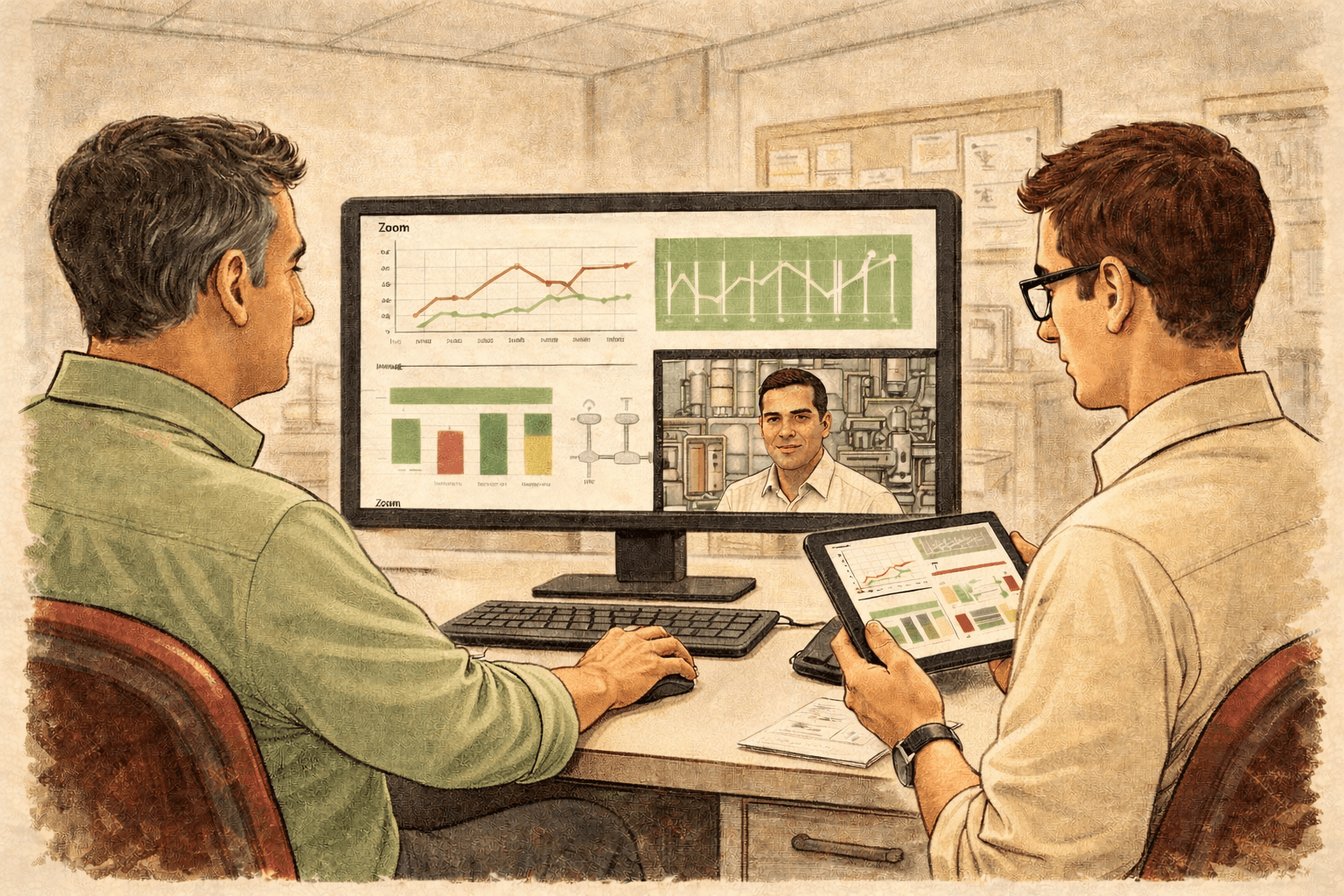
Atlas operates as an extension of the engineering team, continuously monitoring plant data, diagnostics, and control behavior.

This creates a shared, ongoing view of performance, as an extension of your team.

Maintain continuous visibility into plant performance

→ monitoring, diagnostics, and performance tracking

Atlas operates as an extension of the engineering team, continuously monitoring plant data, diagnostics, and control behavior.

This creates a shared, ongoing view of performance, as an extension of your team.

Work alongside engineers to diagnose and act

→ model updates and system alignment

Atlas works alongside plant engineers through regular reviews of unit performance, transitions, and control behavior.

Together, we troubleshoot issues, evaluate tuning and system changes, and identify opportunities as conditions evolve.

Work alongside engineers to diagnose and act

→ model updates and system alignment

Atlas works alongside plant engineers through regular reviews of unit performance, transitions, and control behavior.

Together, we troubleshoot issues, evaluate tuning and system changes, and identify opportunities as conditions evolve.

Adapt performance as plant conditions change

→ model updates and system alignment

Plant conditions continuously shift due to feed variability, maintenance activities, and operational decisions.

The Remote Resident™ keeps control systems aligned with changing plant conditions through continuous monitoring, adjustment, and engineering support embedded within the plant’s workflow.

Adapt performance as plant conditions change

→ model updates and system alignment

Plant conditions continuously shift due to feed variability, maintenance activities, and operational decisions.

The Remote Resident™ keeps control systems aligned with changing plant conditions through continuous monitoring, adjustment, and engineering support embedded within the plant’s workflow.

As performance drifts over time

These are the signals continuously monitored and corrected to maintain performance in operation:

Frequent operator intervention

Operators regularly moving loops to manual or overriding APC actions to maintain stability.

Performance drift after improvements

Control performance improving after tuning or projects, then gradually drifting back over time.

Changing plant conditions

Feed variability, maintenance activities, and operational changes causing models and tuning to drift out of alignment.

Limited visibility into performance

Lack of continuous monitoring makes it difficult to detect performance drift, instability, or emerging issues early.